
October 23, 2026
Mangrove Wildlife in Puerto Rico: Birds, Manatees and What You Can See by Boat
Herons, pelicans, iguanas and sometimes manatees. A local captain explains the wildlife of the Piñones mangroves and the best time to see it.
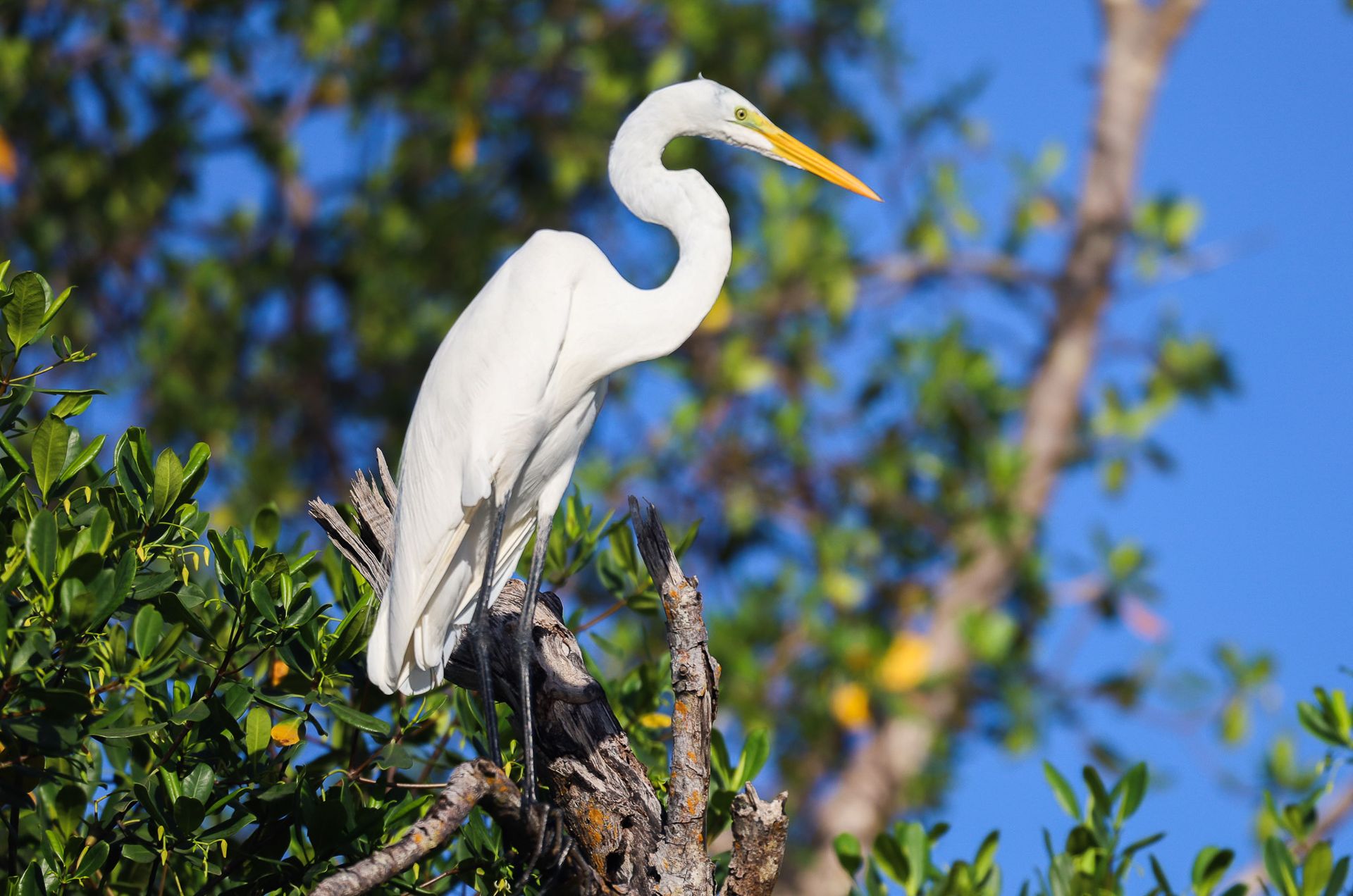
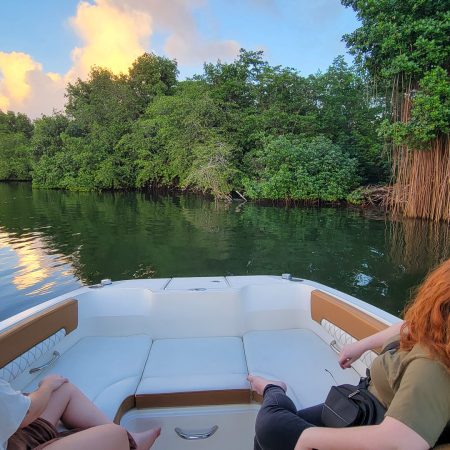
Ten minutes from the hotels of Isla Verde there is a place where the noise stops. The water turns the color of tea, the trees close over the channel and a heron stands so still that guests think it is a statue. This is the mangrove forest of Piñones and Torrecilla Lagoon, and I have been taking people into it for more than 13 years.
I’m Captain Jose. I never get tired of this place, because it is never the same twice. Here is what lives in the mangroves of Puerto Rico and how to give yourself the best chance of seeing it.
What Is a Mangrove, and Why Does It Matter?
Mangroves are trees that grow where the land meets salt water. Puerto Rico has four kinds: red, black, white and buttonwood. The red mangrove is the one you will remember, standing on tall arched roots that look like legs walking into the water.
Those roots do quiet, important work. They hold the coast together during storms, filter the water and give shelter to young fish, crabs and shrimp. Much of the seafood served in the kiosks of Piñones began its life hidden among them. The forest of Piñones is the largest mangrove forest in Puerto Rico, and it sits right beside the capital.
For the families of Piñones and Loíza this forest has been a pantry, a shelter and a home for generations. When I guide a tour here I am a guest too, and I try to act like one.
The Birds You Are Likely to See
- Great egret. Tall, white and elegant, usually fishing alone at the edge of the channel.
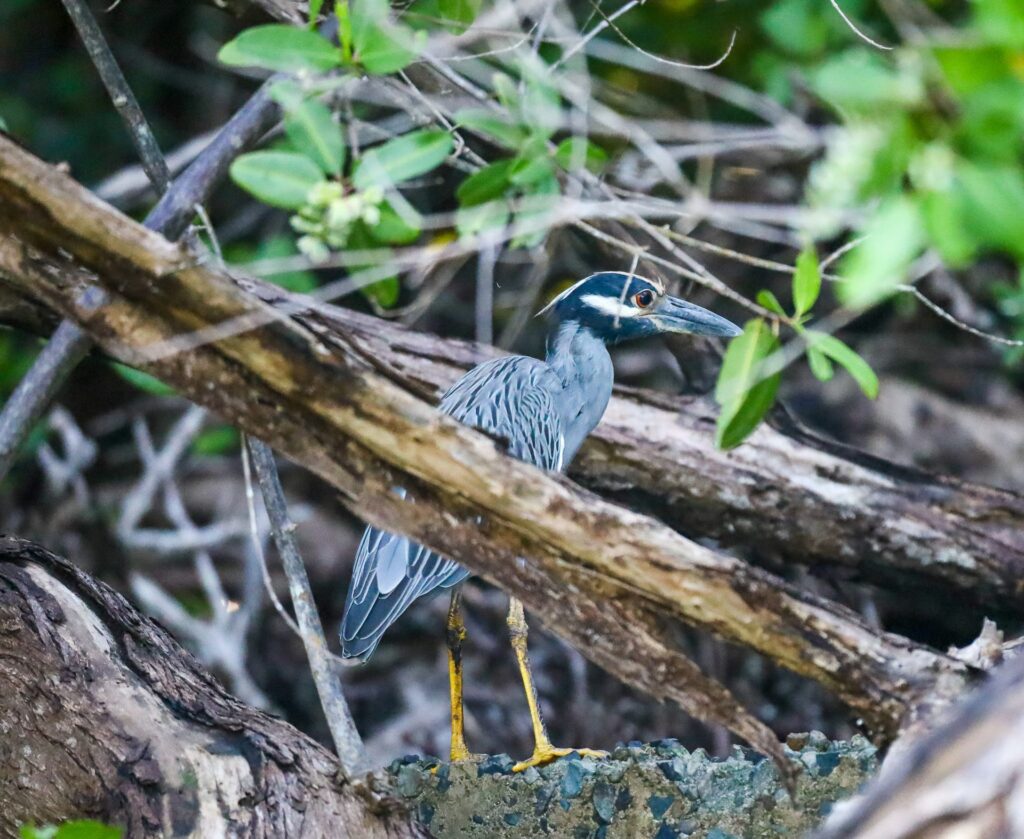
- Yellow-crowned night heron. Stocky and gray with a pale crown. It loves crabs and waits for them on low branches.
- Green heron. Small, shy and patient. Look close to the waterline.
- Brown pelican. You will see them dive headfirst into the lagoon and come up with a fish.
- Royal tern. White with an orange bill, often resting on posts and buoys.
- Magnificent frigatebird. The big dark bird with a forked tail that glides high above without moving its wings.
- Bananaquit. We call it reinita. Tiny, yellow chested and everywhere on the island.
- Red-tailed hawk. Known here as guaraguao, circling over the forest on warm afternoons.
Bring binoculars if you have them. If not, do not worry. Our boat moves slowly and quietly, and the birds here let us come closer than you would expect.
Manatees: The Gentle Surprise
The Antillean manatee lives along the coasts of Puerto Rico and is protected by law. Now and then one comes into the lagoon to rest and feed in the calm water. When it happens the whole boat goes silent, and then everyone whispers at once.
I will be honest with you: we cannot promise a manatee. They are wild, they are few and they choose their own schedule. What I can promise is that we know where they like to be, that we slow down in those areas and that we never chase or touch them.
Under the Roots and On the Branches
- Iguanas. Large green iguanas sun themselves on the branches over the water. Children usually spot them first.
- Mangrove crabs. Small dark crabs climb the roots and trunks by the dozen.
- Fish. Tarpon roll at the surface, and young snook and snappers hide in the shade of the roots.
- Jellyfish and rays. On clear days you may see them pass under the boat.
The Best Time to See Wildlife
Early morning, without question. The water is flat, the air is cool and the birds are feeding. Our first departure of the day is at 6:00 AM, and guests who make the effort are always glad they did. The last light before sunset is the second best window, when the egrets fly back to their roosting trees.
Our Morning Serenity eco tour is built around those quiet first hours. If you have less time, the 30-Minute Mangrove Ride goes straight into the channels.
Why a Small Boat Makes the Difference
The channels are narrow and shallow. Our Bayliner draws very little water, so it can go where bigger boats cannot, and with a maximum of 6 guests there is no crowd to scare the birds. It is a dry, shaded ride, good for cameras, for small children and for grandparents. Read more on our mangrove wildlife boat tour page.
Mangrove Wildlife: Common Questions
Are there crocodiles or dangerous animals?
Spectacled caimans, a small relative of the alligator, live in some lagoons of the island and are occasionally seen. They are shy and keep away from boats. You stay aboard the whole time.
Are there many mosquitoes?
On the moving boat, very few. At dawn and dusk a little repellent is a good idea.
Can I bring a professional camera?
Please do. The ride is dry and steady. Photographers also enjoy our photography boat tour.
Is this a good tour for a school or science group?
Yes. We host educational tours for students and field trips for researchers.
Come Quietly and Look Closely
I believe places like this are a gift, and that we are meant to care for them. Come see the mangroves with us, slowly and quietly, and you will understand why.