

November 22, 2026
By Captain Jose Cruz
What to Do If You Get Sick or Hurt in Puerto Rico: A Tourist’s Guide
What to do if you get sick or hurt in Puerto Rico: when to call 911, what to expect in the ER, a side-by-side hospital comparison, private doctors, insurance and tips from a local captain.
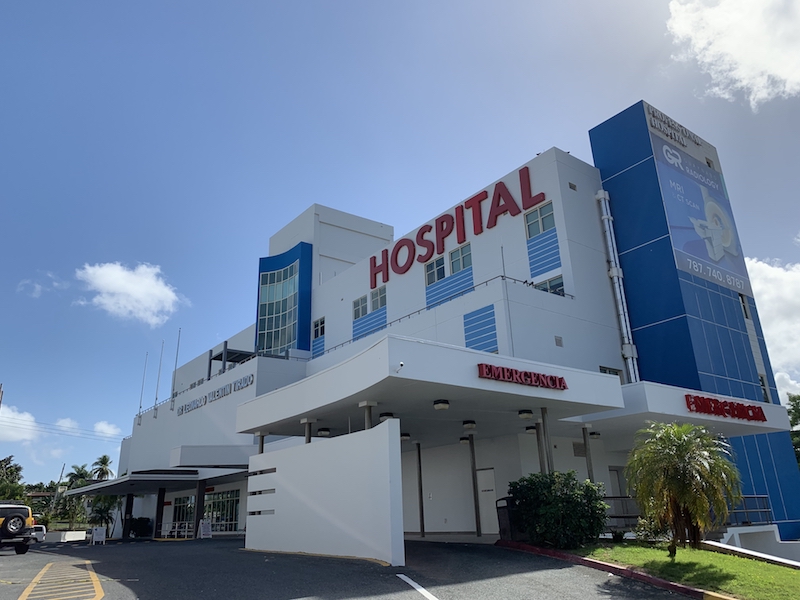
If you get sick or hurt in Puerto Rico, knowing what to do before you need it can save you hours and money. By Captain Jose Cruz, who runs ground transportation and water transport in Puerto Rico.
The short version
Puerto Rico has real hospitals and a working 911 system, but plan ahead: emergency rooms are slower than on the U.S. mainland, specialists are scarce, and the offshore islands of Vieques and Culebra have limited care.
This guide is for visitors. It tells you what to do in an emergency, what to expect at the hospital, and how to be covered before you land. It is not medical advice. In a life-threatening emergency, call 911.
In an emergency, call 911
911 works in Puerto Rico the same way it does on the mainland, for ambulance, police and fire. Use it for chest pain, stroke signs, serious injuries, breathing trouble, severe bleeding or loss of consciousness.
- Give the exact location first: hotel name, street, beach or trailhead. Visitors often only know landmarks, so write down your address each day.
- Do not drive yourself if the problem is serious. An ambulance crew can start treatment on the way.
- If you are on a boat or in the water, call the U.S. Coast Guard on VHF channel 16 or 911. The Coast Guard has evacuated patients by helicopter from Vieques and from boats nearby. In one reported case the patients landed at the San Juan airport and went on to a hospital in Carolina.
What to expect in the emergency room
Expect a longer wait than at home. Using federal CMS data (October 2024 to September 2025), one ER-wait site reports that patients sent home from Bayamon Medical Center spent a median of 4 hours 39 minutes in the ER, against 2 hours 28 minutes for the U.S. Hospital Damas in Ponce was faster, at 3 hours 25 minutes.
Crowding is also a recurring story. In December 2025, hospitals in Carolina, Hato Rey and Humacao were criticized for running short of beds. The Health Secretary replied that diversions between emergency rooms are a normal, regulated process and that hospitals have always had capacity.
Behind the waits is a shortage of doctors. A study ordered by the federal oversight board puts the gap at 1,200 specialists, and the island has about 9,000 active physicians, roughly half of what it had 20 years ago.
What that means for you:
- Bring your insurance card, photo ID, a list of your medications and allergies, and a phone charger.
- For minor problems such as a sore throat, a urinary infection or a mild allergy, an urgent care clinic or telemedicine visit can save hours. Save the ER for real emergencies.
- Triage decides who is seen first, so a long wait often means others are sicker, not that you were forgotten. Speak up if you get worse.
Which hospital? A side-by-side comparison
Guests ask me all the time which hospital to go to and why not another. Staying in Isla Verde or Condado? The closest options differ, so check the Area column. This table puts the main San Juan options side by side. The rating is the Google Maps score as of November 22, 2026, with the number of reviews in parentheses. Green is 3.3 or higher, yellow 3.0 to 3.2, orange 2.7 to 2.9, red below 2.7.
| Hospital | Area | Google rating | Known for | What reviewers say | Go if… / think twice if… |
|---|---|---|---|---|---|
| Ashford Presbyterian Community Hospital | Condado | 2.8 (483) | In the main tourist district, with a 24-hour ER | Mixed. Some report fast check-in and admission, others long waits, dirty areas and trouble getting records after leaving the island | Go if you are staying in Condado or Old San Juan and want the closest ER. Think twice if you will need records sent abroad |
| Hospital Auxilio Mutuo | Hato Rey | 3.1 (765) | One of the largest hospitals in San Juan, about 460 beds | Inpatient nurses get praise. ER reviews describe a confusing process and long waits | Go if you may need a larger hospital or admission. Think twice for a quick minor visit |
| Centro Medico de Puerto Rico | Rio Piedras | Not rated here | Level 1 trauma care and the largest medical complex in the Caribbean | No reviews summarized | Go if a 911 crew takes you there for a serious injury. Think twice for minor problems, since the most serious cases are seen first |
| Hospital UPR Dr. Federico Trilla | Carolina | 3.1 (367) | 24-hour ER with a pediatric area, near the airport and Isla Verde; receives patients flown in from Vieques | Reviewers criticize the condition of the building. One says tests were prompt, though results took over 4 hours | Go if you are near Isla Verde or the airport, or coming from Vieques. Think twice if you want a newer facility |
| Doctors’ Center Hospital San Juan | Santurce | 3.0 (314) | Private hospital in Santurce | Praise for staff during planned surgery. A few mainland visitors report cleanliness, billing and attention problems | Go if you want a private hospital close to Santurce and your insurance accepts it. Confirm coverage first |
| Hospital Pavia Santurce | Santurce | 2.6 (474) | Private hospital; first in Puerto Rico to receive a medical tourism certification, in 2015 | Many complaints about waits, short staffing and slow results. One reviewer praises its cardiac unit | Go if your insurer sends you there or you need heart care. Think twice if speed matters most |
| The San Jorge Hospital (children) | Santurce | 3.3 (368) | Children’s hospital with an ER and pediatric intensive care | Parents describe quick triage and good care. One reports a 6-hour wait for allergy medicine and a surprise bill | Go if the patient is a child. Think twice for adults |
| HIMA San Pablo Bayamon ER | Bayamon | 2.8 (49) | Large private hospital with a 24/7 ER, west of San Juan | Reviewers describe very long visits, one of 10 hours for 4 stitches, and cleanliness problems. Only 49 ratings | Go if you are staying west of San Juan. Treat the rating with caution because few people have rated it |
How to choose
- Serious emergency: do not choose. Call 911. The crew takes you where your condition and the hospital’s capacity fit best.
- Not life-threatening: go to the closest one. Every hour in the car is an hour without care, and ratings are close to each other.
- Children: the children’s hospital is built for it.
- Insurance: call ahead and ask whether the hospital accepts your plan.
- Read ratings as patient experience: Google scores reflect waits, staff attitude and cleanliness, not medical results. They are snapshots from a mix of visits, and several are based on few reviews.
- Expect long waits anywhere: one federal-data summary puts Puerto Rico’s median ER stay at over five hours, against about 2.7 hours (162 minutes) for the U.S. overall. That is a different measure from the 2 hours 28 minutes above, which counts only patients sent home.
Captain’s pick
This is how I would choose, for myself and for my guests.
- If things go very badly: Centro Medico de Puerto Rico in Rio Piedras. It has Level 1 trauma care.
- If it is something in between: a municipal urgent room, called a CDT (centro de diagnostico y tratamiento). The Health Department counts 135 emergency rooms in CDTs across the island. They are outpatient centers, often run by the municipality, so call ahead for hours and to ask what they can treat.
- If it is life-threatening: 911 first, whatever the plan above.
Not an emergency? Private doctors, video visits and pharmacies
The ER is not the only door. For a problem that is not life-threatening, there are other options, and they can save you hours.
- Private doctors. Many doctors in Puerto Rico also see patients in private offices. Call first and ask three things: do they take your insurance, can you pay on the spot, and what will it cost. If you pay without insurance, federal rules entitle you to a good-faith cost estimate if you ask for it.
- Video visits. A doctor licensed in Puerto Rico can see you by video at your hotel, as long as you are physically on the island. One provider I found charges US$79 per visit and does not bill insurance. This is not an endorsement, and it is not for emergencies.
- Walk-in urgent care. I could not confirm a walk-in urgent care clinic with an address and hours inside Condado, Isla Verde or Old San Juan, so ask your hotel which clinic they send guests to and call before you go.
- Pharmacies. The Walgreens on Ashford Avenue in Condado is open 24 hours, but its pharmacy counter is not. The nearest 24-hour pharmacy counter is the Walgreens at 2505 Carr. 841 in Guaynabo, and only five counters on the island stay open all night. Bring your medicine in its original bottle, since a pharmacy may be able to transfer a prescription.
- If it is a real emergency, the ER has to evaluate you even if you cannot pay. Do not delay care because of cost.
Why some people fly to Puerto Rico for care
Some travelers come to Puerto Rico on purpose to get treated. A friend of mine in Florida chose to fly to Puerto Rico with a broken arm to have it fixed, and another came with a bad tooth, because the cost here is lower than at home.
I am not the only one who has noticed. Puerto Rico has promoted itself for years as a medical and dental tourism destination. Discover Puerto Rico says care here can cost up to 40% less than on the U.S. mainland, and up to 85% less for dental work. Those are marketing claims, not audited numbers. A 2018 estimate put the number of medical visitors at about 15,000 a year, many of them from nearby Caribbean islands.
If you are thinking of it:
- Ask your doctor whether it is safe to fly with your injury or condition.
- Ask whether the doctor is board-certified and which hospital or clinic will do the procedure.
- Get the full price in writing, including follow-up visits.
- Keep your records and imaging so your doctor at home can continue your care.
- Plan for complications. The CDC warns that infections or repeat surgery can erase the savings.
Insurance and costs
Travel insurance is not required to visit Puerto Rico, and as a U.S. territory the island accepts most U.S. health plans. That makes coverage easier than in many Caribbean destinations, but it does not make care free.
- Check your plan before you fly. Confirm that your insurer covers out-of-network emergency care in Puerto Rico and what your deductible is.
- Visitors from outside the U.S. should buy travel medical insurance. Without it, a hospital stay can cost tens of thousands of dollars. One insurer reported covering more than 139,000 Canadian dollars for a single emergency in Puerto Rico, including about 42,000 in hospital fees and 39,000 in doctors’ fees.
- Ask about medical evacuation. If the care you need is not available on the island, a flight to a mainland hospital is a separate and very expensive cost. The CDC notes that evacuation coverage can matter most when someone is severely ill or injured.
- Keep every receipt and report. You will need them for any reimbursement claim.
Vieques and Culebra
The offshore islands have far less care than the main island, so plan for it before you go. If you are traveling in the storm months, also read hurricane season in Puerto Rico.
- Vieques lost its hospital after Hurricane Maria in 2017. A new $85 million health center with an emergency room, dialysis, lab and pharmacy has been built, and its helipad received full accreditation in April 2026. Its opening was delayed, so confirm with the municipality or your lodging which services are running today.
- Culebra has a small health center. Local press reported in August 2026 that the continuity of its services was in doubt.
- Serious cases are flown or ferried to the main island. Weather can ground flights and stop ferries. In February 2026 the ferry service from Ceiba was suspended by sea conditions and travelers were stranded for hours.
- Bring what you need. Pack enough of your regular medication for extra days, and keep a basic first-aid kit.
- Be conservative with risk. Snorkeling far from shore, remote hikes and night driving are harder to recover from when the nearest emergency room is a flight away.
Tips from a captain
I move visitors around Puerto Rico by road and by water (more about me here), so these are the habits I would want every traveler to have. They are my own opinion, not official guidance.
- Tell your captain or driver about health problems before you go. Mention allergies, heart or breathing conditions, pregnancy and any medication. A crew that knows can plan for it.
- Ask about safety gear on any boat trip. Life jackets for everyone, a first-aid kit, a working VHF radio and a captain who holds a U.S. Coast Guard license are reasonable things to ask a charter before you book.
- Take seasickness medicine early. It works better an hour or two before you board than after you feel sick.
- Heat and sun are the most common problem. Bring water, shade and sunscreen (here is what to wear and bring on a boat tour), and say so if you feel dizzy or faint. Do not wait until you are back on shore.
- Check the weather and sea conditions on the day. If a captain cancels or changes the route for safety, that is a good sign, not a bad one.
- In an emergency on the road, call 911 first. A car or ride-share is not an ambulance. Once the situation is stable, ask your driver to take you to the closest emergency room.
- Know where you are. Keep your hotel’s name and address handy and share your plans with someone on shore, especially for remote beaches and the islands.
Sunburn: the problem I see most
The most common problem I see with guests is sunburn. It ruins the rest of the trip and it is almost always avoidable. Here is how to read it.
| Level | What you see | What to do |
|---|---|---|
| Prevent it | Nothing yet | Use broad-spectrum sunscreen SPF 30 or higher, reapply every 2 hours and after swimming, wear a hat and a shirt, and take breaks in the shade. The sun is strongest in the middle of the day, and the sea reflects it |
| Mild | Red, warm, tender skin | Take a cool shower, use aloe or a moisturizer, drink plenty of water and stay out of the sun |
| Painful | Swollen skin or small blisters | Use cool compresses, do not pop blisters, keep the area covered and use a pain reliever as its label directs |
| See a doctor | Large blisters, fever or chills, dizziness, vomiting or confusion | Go to urgent care or the ER. Call 911 if the person is confused or faints |
If you are booking a boat tour or a private boat charter, ask the captain about shade on board and plan your sunscreen before you leave the dock.
Before you travel: a checklist
- Confirm your health plan covers you in Puerto Rico, or buy travel medical insurance with evacuation
- Save 911, your hotel’s address and the nearest emergency room in your phone
- Pack medications in original containers, plus a copy of each prescription
- Carry insurance cards, photo ID and a list of allergies and conditions
- Going to Vieques or Culebra: check which health services are open and plan for ferry or weather delays
- Keep a card with an emergency contact at home
This guide is general information and may be out of date. Hospital services, hours and phone numbers change, so verify them before you travel.
Sources
- Metro PR: hospitals deny diversions and Health Department statement, Dec. 10, 2025
- ER wait time, Bayamon Medical Center (CMS data) and Hospital Damas
- El Nuevo Dia: shortage of specialists
- BBC Mundo via Animal: health crisis in Puerto Rico
- Metro PR: Vieques helipad accredited
- El Nuevo Dia editorial: fair care for Vieques and Culebra
- Metro PR: HMS Ferries and Ceiba
- TuGo: cost of a medical emergency in Puerto Rico
- CDC Yellow Book: travel insurance and evacuation
- Squaremouth: Puerto Rico travel insurance
- Hospital ratings and review themes: Google Maps, retrieved November 22, 2026
- Advisory Board: ER wait times by state, Aug. 2026 (CMS data)
- Metro PR: first medical tourism certification, Hospital Pavia Santurce
- List of hospitals in Puerto Rico (bed counts)
- Casrai: guide for tourists who get sick in Puerto Rico (telehealth provider)
- Casrai: 24-hour pharmacies in Puerto Rico, verified October 2, 2026
- Casrai: see a doctor without insurance in Puerto Rico
- Discover Puerto Rico: Medical & Dental Tourism
- Metro PR: Buscan impulsar el turismo medico, 2018
- CDC Yellow Book: medical tourism
- Casrai: how to find a CDT in Puerto Rico